
Guidance covers exposure symptoms, appliance maintenance and the role of connected CO alarms
WILMINGTON, Del., Nov. 17, 2026 — X-SENSE is encouraging households to review carbon monoxide (CO) safety as the heating season approaches. The guidance addresses common exposure sources, warning signs and steps to improve early detection without overlooking equipment maintenance.
Recognize a Risk That Cannot Be Seen
Carbon monoxide is a colorless, odorless gas produced when fuels such as natural gas, oil, wood or gasoline burn incompletely. Furnaces, water heaters, fireplaces, portable generators and running vehicles can introduce CO into or around a home when equipment is misused, damaged or poorly vented.
According to the Centers for Disease Control and Prevention, possible symptoms include headache, dizziness, weakness, nausea, chest pain and confusion. Because symptoms may resemble an everyday illness, residents should not wait for obvious signs of a gas problem before acting.
Reduce Exposure at the Source
The U.S. Consumer Product Safety Commission recommends yearly professional inspections of home heating systems, chimneys and vents. Households should also keep exhaust paths unobstructed and never use a gas oven to heat a room.
Portable generators should operate outdoors at least 20 feet from the home, with exhaust directed away from openings. Charcoal grills do not belong indoors, and vehicles should never be left running in attached garages, even with the door open.
Install and Maintain CO Alarms
CPSC advises placing a carbon monoxide detector on each level of the home and outside sleeping areas, following installation directions and local requirements. Alarms should remain unobstructed; kitchen areas and spaces immediately above fuel-burning appliances are not recommended locations.
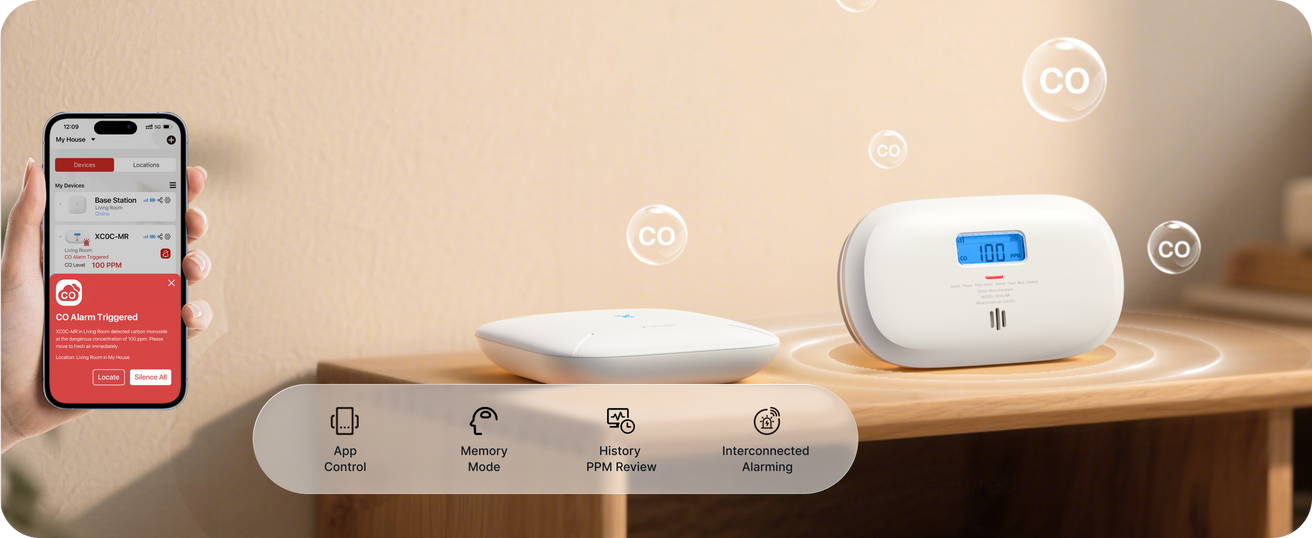
Available alarms differ in how they display information and communicate warnings. The X-SENSE XC0C-MR smart carbon monoxide alarm, for example, uses an electrochemical sensor, an LCD display and a replaceable CR123A battery. X-SENSE lists a five-year battery life under stated test conditions and a maximum alarm service life of 10 years.
For mobile notifications, the model requires an SBS50 base station connected through a 2.4 GHz Wi-Fi network; it is not a direct-Wi-Fi alarm. Compatible interconnected alarms can extend the audible warning. Families should test devices and respond to fault and end-of-life signals according to the manual.
Act Promptly When an Alarm Sounds
If a CO alarm activates or poisoning is suspected, occupants should leave for fresh air, call 911 or local emergency services, and avoid reentering until responders say it is safe. A working alarm is a warning device, not a substitute for safe fuel use and regular appliance service.
About X-SENSE
Founded in 2013, X-SENSE has safeguarded more than 15 million households worldwide with its comprehensive range of smoke alarms, carbon monoxide detectors, and environmental sensors. Backed by international certifications and designed for long-term reliability and user convenience, X-SENSE is committed to delivering innovative safety for every home.
Media Contact
Company Name: X-SENSE ELECTRONICS LLC
Contact Person: Martin
Email: partners@x-sense.com
Website: https://www.x-sense.com/
State/Country: Delaware


