TURKU, FINLAND, October 26, 2026 /EINPresswire.com/ — New multi-material metal 3D printing infrastructure in Finland opens the way to producing complex components that combine different metals in a single part. The infrastructure creates opportunities for combining different material properties in component production and for studying manufacturing processes and component design, for example, in future fusion energy production and aerospace propulsion.
The University of Turku in Finland has expanded its advanced manufacturing infrastructure with the installation of a multi-material recoater in its existing metal 3D printing system. The investment provides an experimental platform for investigating how the geometry and material composition of a component can be designed together to meet different functional requirements.
“Multi-material manufacturing allows us to ask which material is needed in each region of a component and how those materials can work together. This infrastructure gives us a platform to investigate those questions, develop our expertise, and explore new applications with industrial partners,” says Associate Professor Ashish Ganvir, the principal investigator of the AM4Plasma research project that aims to create next-generation plasma generator hardware.
A component may need to withstand heat or wear in one region while transferring heat or providing structural support in another. Multi-material manufacturing creates opportunities to investigate how these functions could be brought together within a single, complex part.
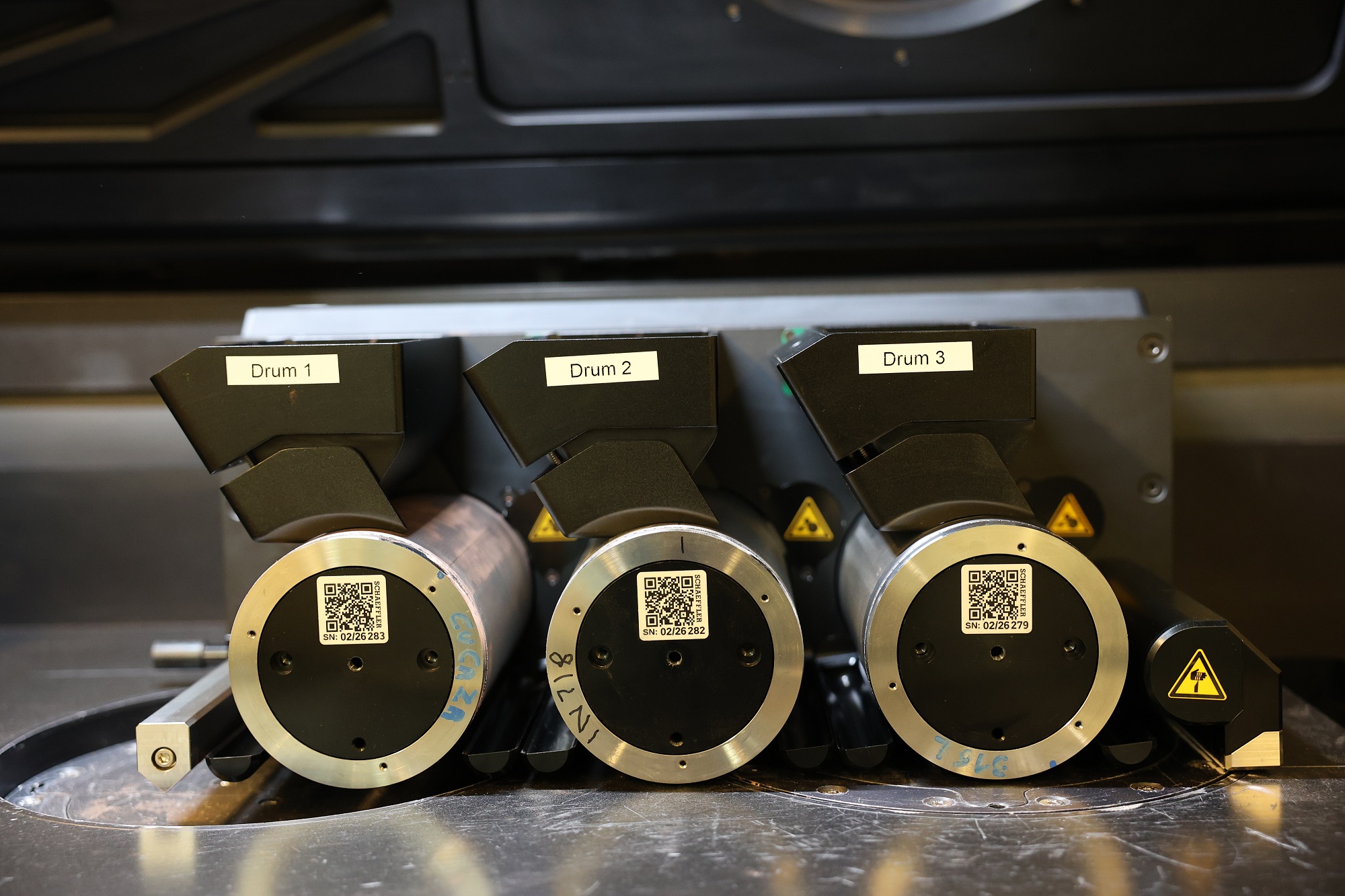
The new capability is enabled by a Schaeffler Aerosint SPD2.1-B5 recoater integrated into the University’s Aconity MIDI+ system. It extends the system’s research possibilities from single-material processing to selective placement of multiple powders within individual layers.
Different Materials Within the Same Layer
In conventional single-material laser powder bed fusion, a recoater spreads one type of metal powder across the build area. A laser then selectively melts the powder according to a digital design, building a component layer by layer.
The multi-material recoater adds control over material placement. Three separate powder-delivery drums allow different powders to be deposited in selected regions of the same layer before laser processing. Repeating this approach across successive layers provides a route to investigating complex components with different materials in different locations.
This brings material distribution into the design process alongside component shape. Researchers can explore how the arrangement of materials could contribute to a component’s intended function and how that arrangement affects its manufacturability.
Understanding How Different Materials Work Together
The ability to position multiple powders opens important scientific questions about how they respond to laser processing and how reliable interfaces can be formed between them.
The infrastructure supports research into laser–material interactions, melting and solidification, and bonding between neighbouring materials. Investigations can also address cracking, other manufacturing defects, and the relationship between processing conditions and local properties.
Selective powder deposition is an enabling capability. Producing a reliable multi-material component also requires suitable material combinations, processing conditions, and interface quality. Establishing these relationships will be central to the research.
For example, researchers could investigate a component with a region intended to withstand intense thermal exposure and another designed to transfer heat towards cooling channels. These kinds of plasma facing components could be used in future fusion-energy and aerospace propulsion platforms. The aim is to understand how such functions can be combined through material placement and component design, and what is needed to achieve the intended performance.
Investment with Value Beyond One Project
AM4Plasma provides an initial application for the infrastructure through research into multi-material components for demanding plasma-generator technology.
“The infrastructure’s longer-term significance extends beyond this application. It provides a platform for future studies of material combinations, manufacturing processes and multifunctional component design”, says Associate Professor Ashish Ganvir.
It also creates opportunities for researcher training and collaboration with industrial partners interested in exploring multi-material manufacturing. By connecting design with experimental studies of processing and material interfaces, the University of Turku can build knowledge that supports the development of future components and manufacturing approaches.
The investment strengthens the capacity of the University of Turku and partners to investigate how different metals can be brought together within complex parts—and how that capability can be translated into useful engineering functions.
The infrastructure was funded through the ongoing EUREKA Network project AM4Plasma, coordinated by the University of Turku and supported in Finland through Business Finland’s Co-Innovation programme.
Ashish Ganvir
University of Turku
communications@utu.fi
Legal Disclaimer:
EIN Presswire provides this news content “as is” without warranty of any kind. We do not accept any responsibility or liability
for the accuracy, content, images, videos, licenses, completeness, legality, or reliability of the information contained in this
article. If you have any complaints or copyright issues related to this article, kindly contact the author above.

Media gallery