
Key Takeaways
- Lead capture starts with responsiveness: An unanswered call can end the customer journey before a business learns who called or what they needed.
- 62.1% of calls went unanswered live: A 411 Locals study of 85 businesses across 58 industries found 37.8% went to voicemail and 24.3% received no response.
- Speed matters: Velocify’s analysis of roughly 3.5 million leads found that attempting contact within one minute increased conversion rates by 391%.
- The useful role is broader than answering: A voice agent can collect information, qualify inquiries, answer routine questions, and move qualified prospects toward an appointment.
Why Customer Support Has Become Part of Lead Generation
For a small or midsize business, not every customer support call is just about support—a caller asking about pricing, availability, services, turnaround time, or appointments may be a potential new customer. If that conversation never takes place, the business loses both the immediate inquiry and the chance to learn what the prospect is looking for.
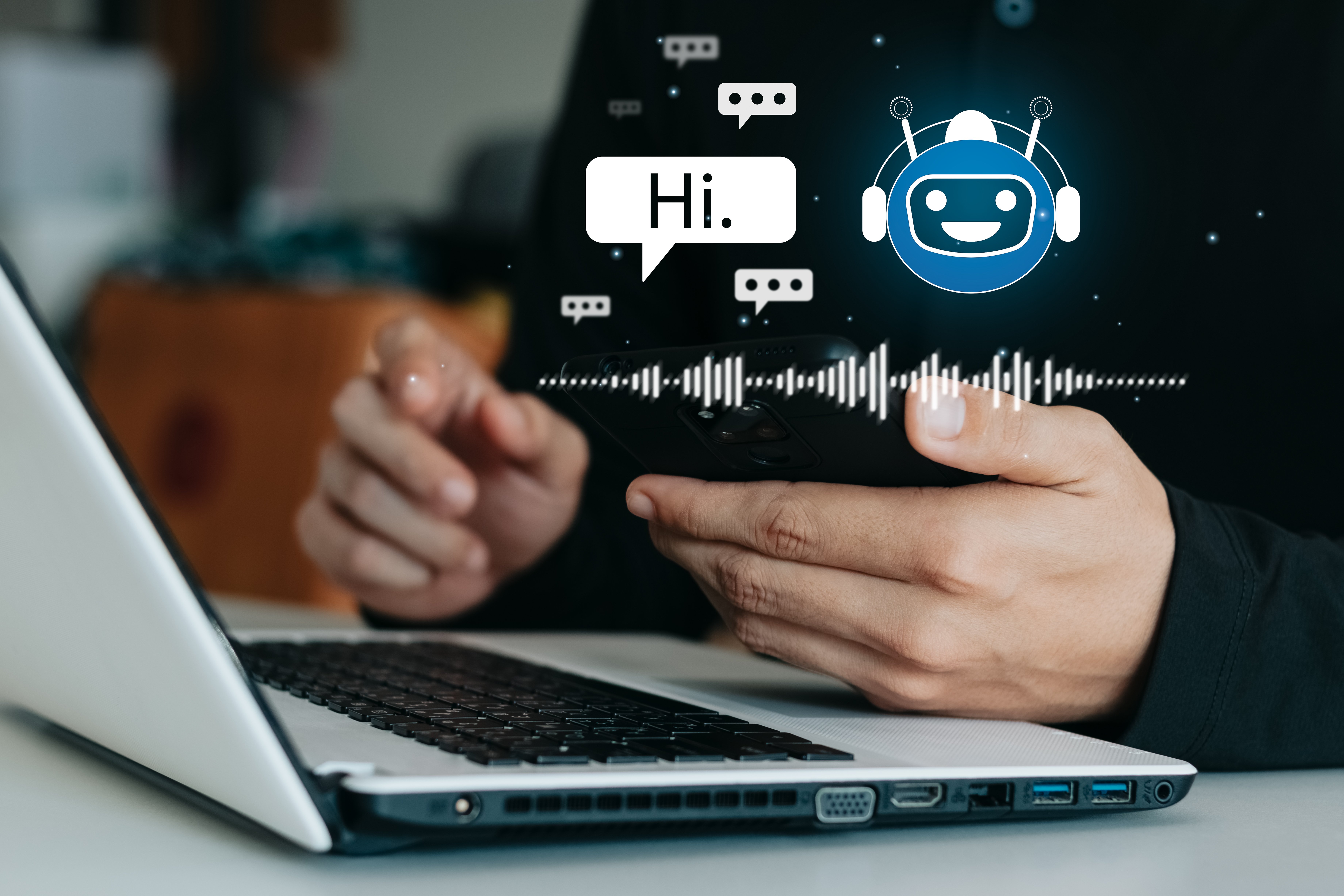
This is where AI voice agents for customer support play a key role in lead capture. Rather than treating every inbound call as a basic request, businesses can use AI agents to guide conversations toward information gathering and next steps.
The distinction matters. A generic answering system may record a name and phone number. A properly configured voice agent can go further by asking relevant questions, identifying the nature of an inquiry, and collecting information that a sales or service team can use later.
The Missed-Call Problem Is Also a Lead-Capture Problem
The 411 Locals study provides a useful illustration of the gap. Researchers monitored calls from 85 businesses across 58 industries for 30 days. Only 37.8% of calls were answered by a live person, while 37.8% went to voicemail and 24.3% received no response.
The age and methodology of this study matter: it was published in 2016 and should not be treated as a current industry-wide benchmark. But the underlying operational issue remains straightforward. When a business cannot respond to an inbound caller, it may never collect the information needed to determine whether that person was a customer, prospect, existing client, or urgent inquiry.
That makes lead capture a useful way to evaluate phone support. The question is not simply whether someone answered. It is whether the interaction produced useful information and a clear next step.
Why Response Speed Changes the Value of an Inbound Lead
Lead capture also has a timing problem. The longer a prospect waits, the less useful a later response may become.
Velocify’s analysis of approximately 3.5 million leads found that contacting a lead within one minute increased conversion rates by 391%. The finding comes from vendor research rather than an independent academic study, so it should be treated as directional evidence rather than a universal conversion guarantee.
Still, the operational lesson is important for SMBs: a lead-response process that depends entirely on an employee being free at exactly the right moment is difficult to execute consistently.
An AI voice agent changes the timing equation by providing an immediate conversational layer for inbound inquiries. The agent can gather the reason for the call, ask qualifying questions, record relevant details, and move the prospect toward scheduling or human follow-up.
What Should an AI Voice Agent Capture From a Lead?
Effective lead capture is not about collecting the maximum amount of information. It is about collecting the right information.
For example, a service business may need to know what service the caller wants, where the service is required, how soon it is needed, and how the caller can be contacted. A professional services company may need to understand the type of project, its scope, timeline, and whether an initial consultation is appropriate.
This makes business-specific configuration important. The questions should reflect the company’s actual qualification process rather than a generic script.
The agent can also handle common customer questions during the same interaction. That prevents a support conversation from becoming a dead end when the caller could instead become a qualified prospect.
Why 24/7 Lead Capture Is Different From Simply Being Available
Round-the-clock availability matters because customer demand does not necessarily follow employee schedules. A prospect may call during lunch, after work, on a weekend, or while the team is already handling another customer.
The value of 24/7 voice support is therefore not just that a phone keeps ringing. It creates an opportunity to preserve the first stage of the customer journey when a human employee cannot participate immediately.
That can include answering routine questions, capturing contact information, identifying intent, qualifying an inquiry, and scheduling an appointment. More complex conversations can then move to the appropriate person.
Turning Phone Conversations Into Usable Lead Data
The strongest customer-support workflows treat a voice conversation as a source of structured business information.
Instead of ending with “someone will call you back,” the interaction can establish what the caller wanted, whether the inquiry fits the business, what information was provided, and what should happen next. That reduces the distance between a phone call and a usable sales or service opportunity.
The bigger shift is conceptual: customer support and lead generation do not always have to be separate processes. For SMBs, the same conversation can answer a customer’s question while also determining whether there is a legitimate business opportunity behind the call.
Making 24/7 Voice Support Work for the Business
AI voice agents are most useful when their role is defined around actual business processes rather than simply being told to “answer calls.” The quality of the information they receive, the questions they ask, the boundaries placed on their responses, and the handoff process all affect the resulting customer experience.
For SMBs, the practical opportunity is to use voice support as an always-available first layer: respond to inquiries, capture meaningful information, qualify prospects, and create a clear path to the next human or automated step. Custom AI voice agents can make this process more relevant by using business-specific information, workflows, and response rules rather than treating every caller the same way.
That turns an unanswered or poorly handled call from a dead end into a conversation with usable information—and makes 24/7 lead capture part of the customer-support strategy rather than a separate function.
Ai365Agent
support@ai365agent.com
4 Tulip Lane
San Carlos
California
94070
United States


