
Garage Floor Coating of Michigan believes statements that bold should be supported by independently verifiable ASTM testing.
Midland, MI (PRUnderground) September 18th, 2026
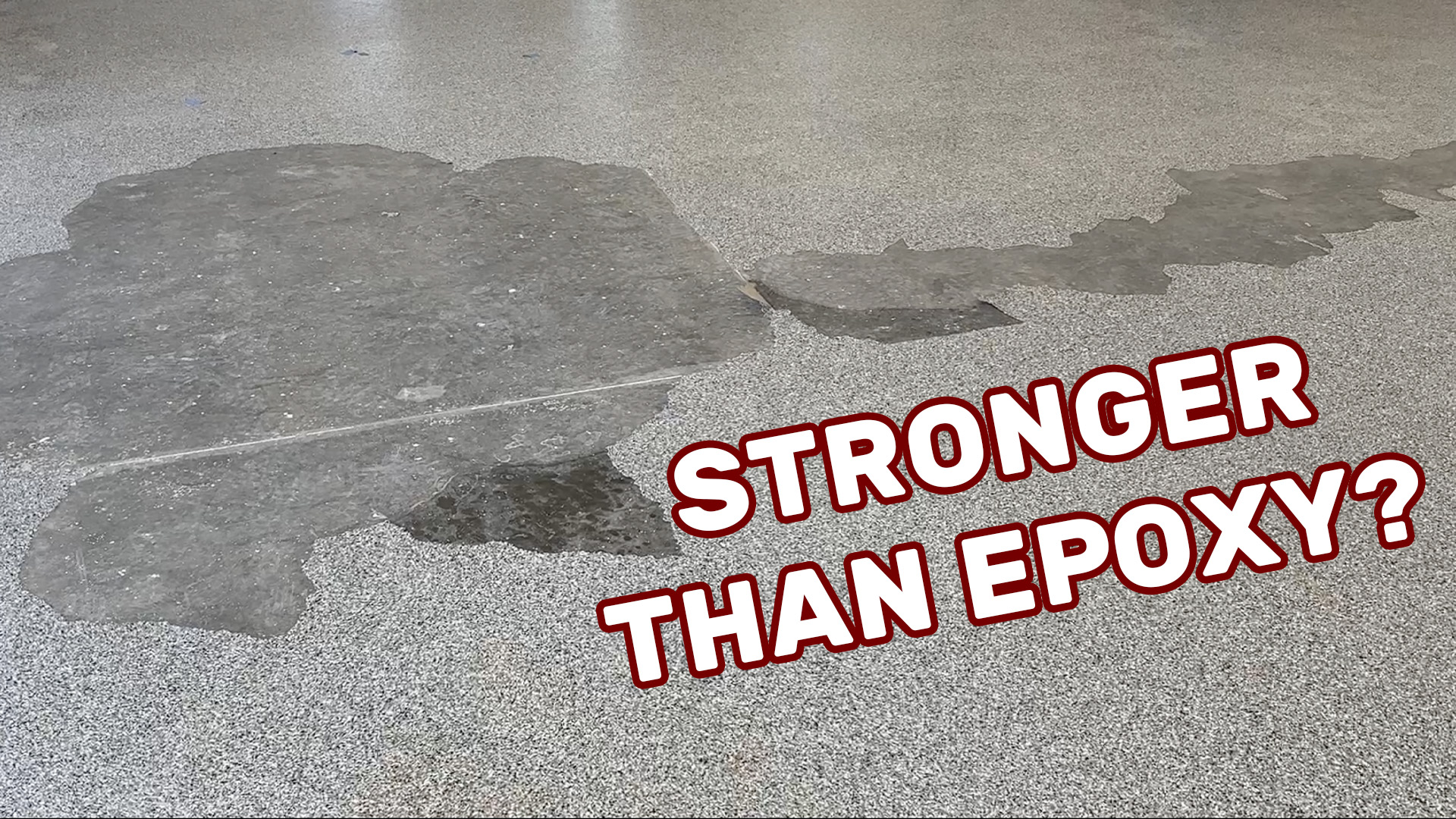
We live in a world that rewards speed, and garage floor coatings are not exempt. Manufacturers and distributors are increasingly using aggressive statements like “20 times stronger than epoxy” to market their products without any real science behind the claim.
Garage Floor Coating of Michigan believes statements that bold should be supported by independently verifiable ASTM testing.
Because cutting the moisture-mitigating epoxy base out of the process to save time and money strips out the one component that gives a finished coating any real staying power.
Put the Numbers to the Test
Companies selling 1-day concrete coatings lean heavily on strength multiples and penetration claims, rarely naming the test or the standard those numbers come from.
Garage Floor Coating of Michigan is calling for independent, side-by-side testing across:
-
Concrete penetration and adhesion
-
Moisture-mitigation performance
-
Impact and abrasion resistance
-
Comparative strength claims
-
Plasticizer migration and tire staining
Anyone can print a multiplier on a garage flooring brochure. Verifying it takes an actual test, run by someone with no stake in the sale.
The Moisture Problem Beneath Every Michigan Garage Floor Coating
Concrete looks solid, but it’s actually porous down to a microscopic level, letting groundwater work its way upward through the slab. As that moisture reaches the surface, it turns to vapor and pushes against anything sealing the concrete above it.
A single-layer coating–typically polyaspartic, applied straight over bare concrete–sets before it has time to properly grip a slab under that kind of pressure. The result can look perfect the week it’s installed and still fail later through bubbling, peeling, or the coating lifting off the floor entirely.
Mid-Michigan compounds that risk: groundwater levels around Midland run high for much of the year, and the region’s long, hard winters put concrete through months of repeated freezing and thawing. Without an epoxy layer built to handle that moisture, a coating is fighting a battle it’s not equipped for.
“There is nothing wrong with polyaspartic technology, we use it extensively ourselves,” said Robert G. Hanson, President and CEO of Garage Floor Coating Franchise System Inc. “The problem is where it’s being used. Rapid-cure polyaspartics and polyureas belong on top of the system, not directly on the concrete.”
What Happens Over the Company’s Two-Day Install
Garage Floor Coating of Michigan splits its installation across two visits so each layer has the time it needs to actually do its job.
The first day covers mechanical grinding to open the concrete’s surface for a strong bond, then a 100% solids moisture-mitigating epoxy primer and a full Torginol flake broadcast.
The crew returns on the second day, once everything below has fully cured, to lay down two coats of 100% solids polyaspartic clear topcoat.
Know What Your Warranty Won’t Pay For
A long warranty term doesn’t mean much until you know its exclusions.
Many 1-day warranties don’t cover moisture vapor transmission or hydrostatic pressure, plasticizer migration that shows up as permanent tire staining, or chemical staining–the same issues a rushed, single-layer system is most prone to.
Ready for a Garage Floor Coating Built to Last?
Garage Floor Coating of Michigan installs a genuine 2-day system backed by a Lifetime Moisture Warranty, built for homeowners who want a floor that can handle everything a Michigan winter throws at it. Contact our team to schedule a free estimate and see the difference a properly engineered coating makes.


