
SUMMERVILLE, SC – September 08, 2026 – PRESSADVANTAGE –
Carolina Fence Company has outlined how treated lumber use category ratings apply to fence construction, drawing on the standards published by the American Wood Protection Association. The company is directing the guidance at property owners across Charleston and Dorchester counties, where soil moisture and warm-season conditions place sustained demand on wood installed in ground contact.
The AWPA maintains a use category system that classifies treated wood according to the exposure conditions it is manufactured to withstand. Categories are defined by whether the wood sits above ground, in contact with soil, or in contact with fresh water. Each category carries a corresponding preservative retention level, expressed as a measured quantity of preservative per unit volume of wood.
That retention figure appears on the end tag applied at the treating facility. The tag identifies the preservative used, the retention level achieved, and the use category the material is approved for.
The practical consequence is that treated lumber is not a single uniform product. Wood treated for above-ground exposure carries a lower retention level than wood treated for ground contact, because above-ground applications are expected to shed water and dry between wettings. Contact with soil removes that drying cycle and holds moisture against the wood continuously.
“Two boards can come off the same rack and be rated for completely different jobs,” said Alex Buckman, Owner of Carolina Fence Company. “The tag is the only place where the difference shows up. It is not something anyone can see by looking at the wood.”
The distinction concentrates at the soil line, where a post transitions from open air into the ground. That zone holds moisture and oxygen together, which is the combination fungal decay requires to progress. Wood treated only for above-ground exposure and then set into soil is operating outside the conditions its retention level was specified for.
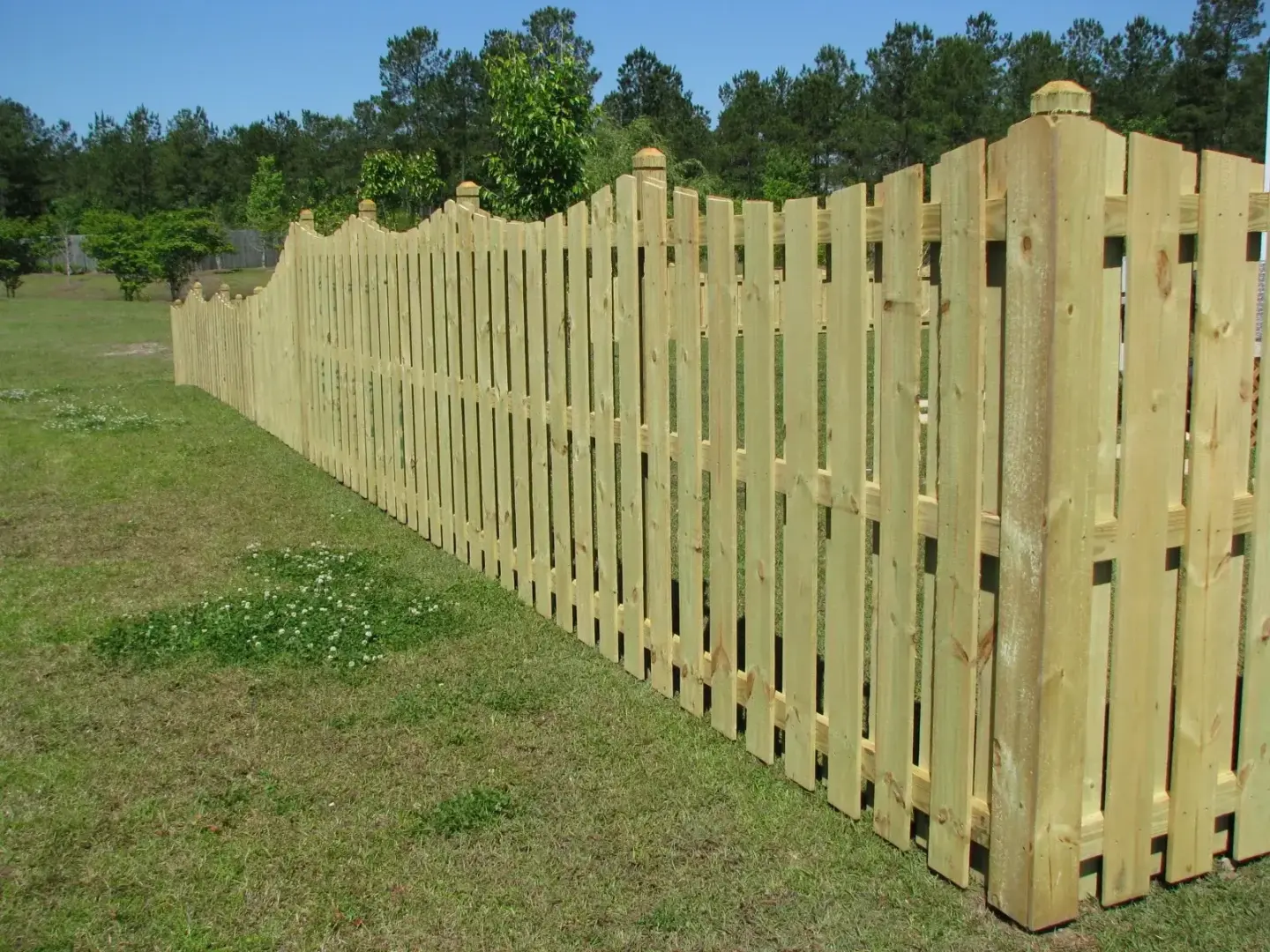
Above the ground line, conditions differ substantially. Rails, pickets and cap boards shed water and dry in open air, which places them in a separate use category from the posts supporting them. A completed fence therefore commonly incorporates treated lumber from more than one category within a single structure.
Matching each component to its actual exposure is consequently part of specifying the fence rather than a single purchasing decision made at the lumber counter. The post, the rail and the picket each occupy a different position relative to the ground, and each has a corresponding category.
The U.S. Department of Agriculture’s Forest Products Laboratory, which publishes the Wood Handbook, identifies moisture content as the governing factor in wood decay. Fungal activity requires sustained moisture above a threshold level, and warm temperatures accelerate the rate at which that activity progresses once the threshold is met.
Both conditions are present across the Lowcountry through much of the year. Sustained humidity, seasonal rainfall and extended warm periods combine to produce an environment where the moisture threshold is met more often and for longer stretches than in drier or cooler regions.
Ground conditions introduce a further variable independent of the lumber itself. The U.S. Department of Agriculture’s Natural Resources Conservation Service reports depth to the seasonal high water table by mapped soil unit, and that depth varies considerably across the region. Where it is shallow, the buried portion of a post spends part of the year in saturated ground.
Soil texture affects the same question. Sandy soils drain quickly but provide less friction against a post surface than heavier soils, while soils that retain water hold moisture against the wood for longer periods after rainfall.
Carolina Fence Company installs wood fencing alongside vinyl, composite, aluminum, ornamental iron, chain link and split rail, and reviews material selection during its initial design and estimate. Conditions at each post location along a run inform which components are specified for which part of the structure.
“The wood is one variable and the ground is another,” Buckman said. “Getting the rating right matters, and so does what happens at the bottom of the hole.”
The company also provides staining, painting and sealing for existing wood fencing. Surface finishes address weathering and ultraviolet degradation, which affect the outer surface of the wood and operate separately from the preservative treatment carried within it. A finish applied to the surface does not alter the retention level of the lumber beneath it.
Manufacturers publish product warranties covering their treated lumber, and terms vary by product line and by application category. Property owners can review those terms directly against the use category of the material specified for a given part of a fence.
Property owners with wood fencing already installed can inspect posts at the soil line, where decay in treated components typically appears first. Posts that move independently of the panels they support, or that sit at a different angle than adjacent posts, indicate conditions worth examining further.
Carolina Fence Company is a family-owned fence contractor with 21 years in business, serving Charleston and Dorchester counties. A member of the American Fence Association, the company installs residential and commercial fencing along with gates, fence maintenance, and tear-out and disposal. The company provides free estimates.
###
For more information about Carolina Fence Company, contact the company here:
Carolina Fence Company – Summerville
Alex Buckman
+18433058284
alex@carolinafencecompany.com
1544 State Rd Suite 107, Summerville, SC 29486, United States
Media gallery



