Originally Posted On: https://www.ucanpack.com/blog/post/mailer-boxes-vs-corrugated-shipping-boxes-what-fits-e-commerce-fulfillment-in-2026
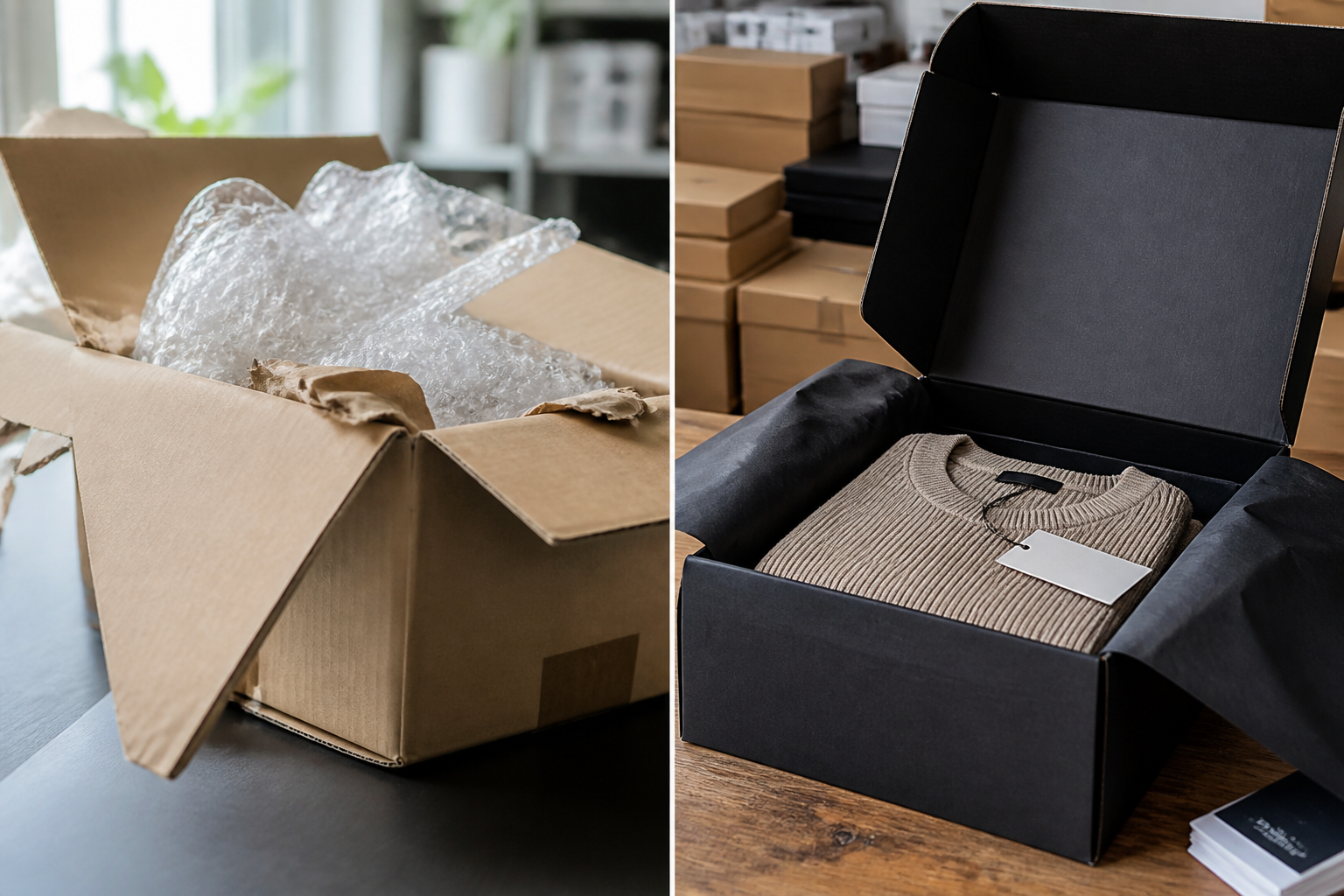
Every damage claim tells a story, and 9 times out of 10, that story starts with the wrong box. Sellers moving 50 to 1,000 orders a month hit a fork in the road fast: mailer boxes or corrugated shipping boxes? It's not a trivial question — pick wrong, and you're either overpaying on postage for a box that's overbuilt, or you're eating replacement costs because a flimsy mailer couldn't handle a 4-lb item stacked under three other packages.
Mailer boxes get a lot of love right now for their clean, self-locking design and their unboxing appeal on Instagram. Corrugated shipping boxes get less attention but quietly handle the heavy lifting — literally — for bulkier, multi-item orders. Both have a place in a fulfillment operation. Neither is right for everything. So which one actually fits your SKUs, your damage rate, and your margins? Let's get specific.
Who This Comparison Is For and What's Actually at Stake
A seller ships 300 orders a month — mostly skincare tubes and small apparel. Half go out in whatever box was on sale last quarter. The other half get crushed corners because the box was two sizes too big. That's the real scenario playing out in fulfillment rooms right now, and it's exactly why choosing between mailer boxes and standard corrugated shipping boxes isn't just a packaging preference. It's a margin decision.
Sellers Shipping 50-1000 Orders a Month
This volume range is the tightest spot in ecommerce. You're past hand-folding boxes in a garage, but you're not big enough to negotiate wholesale rates like a 3PL. Every box choice gets multiplied by hundreds of shipments a month — so a $0.15 difference per unit adds up fast, and the wrong flute strength turns into real damage costs. For sellers in this range, even a specialty run like custom printed jewelry boxes needs to earn its keep on both protection and presentation.
Why the Wrong Pick Shows Up in Your Damage Claims
Here's the thing nobody tells new sellers: packaging mistakes don't show up as a line item. They show up three weeks later as a damage claim, a one-star review, or a refund request. Pick wrong, and you'll feel it in your return rate before you feel it in your invoice.
Structure and Protection: How Mailer Boxes and Corrugated Shipping Boxes Hold Up
Mailer boxes and corrugated shipping boxes solve different problems — one's built for speed and presentation, the other for raw durability. Mix them up and you'll see it in your damage claims report by month two.
Self-Locking Mailer Construction vs RSC Corrugated Builds
Mailer boxes use one-piece, die-cut construction with self-locking tabs — no tape, no assembly headaches. That's a real time-saver if you're packing 200+ orders a day. Standard corrugated shipping boxes rely on RSC (Regular Slotted Container) design, which needs tape on both ends — handles heavier, bulkier loads without buckling.
Flute Strength, ECT Ratings, and What Actually Prevents Crushing
ECT (Edge Crush Test) ratings tell you what survives a warehouse stack, not marketing copy. B-flute is the workhorse for most mailer boxes; C-flute and A-flute show up in heavier-duty shipping boxes meant for pallet stacking. If you're a subscription box packaging manufacturer shipping monthly boxes, B-flute mailers usually hit the sweet spot between cost and crush resistance.
Weight and Fragility Thresholds for Each Box Type
Mailer boxes work best under 10-15 lbs — apparel, cosmetics, small electronics. Beyond that, or with anything genuinely fragile, corrugated shipping boxes with added cushioning win out. Sellers producing custom printed candle boxes often pair heavier stock with interior padding since wax products crack under compression stress.
Branding, Unboxing, and Custom Printing Options
Custom Mailer Boxes with Logo vs Printed Corrugated Shipping Boxes
Which one actually gets photographed — shared?
That's the real question here. A logo printed on a self-locking mailer box hits customers the second they lift the lid — no tape to fight, no extra layer between them and your brand. Printed corrugated shipping boxes work fine for bulk or B2B freight, but the outer surface usually gets buried under labels and carrier stickers. For direct-to-consumer orders, mailer boxes win the unboxing moment nearly every time. Sellers running gift lines or seasonal drops often lean on custom printed gift boxes to add that extra layer of presentation without slowing down fulfillment.
Kraft, Black, and Color Mailer Boxes for Brand Positioning
Color does the heavy lifting before anyone reads a word. Kraft signals eco-conscious and handmade. All-black reads premium and tech-forward. Bright colors — pink, red, blue — grab attention on a porch or in an Instagram flat-lay. Beauty brands shipping serum sets or skincare bundles frequently choose custom printed cosmetic boxes in white or pastel tones to match shelf packaging.
No-Minimum and Low-Minimum Custom Printing Compared
Here's the thing: low minimums change everything for smaller sellers. Bundles starting around 25-100 units mean testing a new box design won't tie up capital for months, unlike traditional printers demanding thousands of units upfront.
Cost, Bulk Ordering, and Where Sellers Actually Buy
Here's a number that surprises most sellers: switching from 100-unit trial orders to 1,000-unit bulk runs can cut per-box cost by 40-60%, depending on flute and print complexity. That gap is exactly why volume shippers stop buying one box at a time and start planning inventory months ahead.
Wholesale Mailer Boxes vs Bulk Corrugated Pricing at Scale
Wholesale mailer boxes price out lower per unit once you clear the 250-500 range, since die-cut, self-locking designs need no tape and less labor at pack-out. Plain corrugated RSC boxes stay cheaper at very low volume, but the gap closes fast once you're shipping 500+ orders monthly.
Cheap Mailer Boxes Near Me vs Big-Box Retail Shipping Boxes
Searching for cheap mailer boxes near me usually turns up retail shelf pricing that's 3-5x wholesale rates — fine for one emergency order, brutal for recurring fulfillment. Sellers who compared a custom apparel packaging supplier against retail shelf options consistently found manufacturer-direct bundles cheaper even after shipping.
Shipping Cost, Postage Class, and Dimensional Weight Differences
Mailer boxes generally qualify for USPS Priority or Ground Advantage at lower dimensional weight than boxier corrugated shapes, since they're flatter and tighter-fitting. That difference alone can shave real dollars off postage on every single order, month after month.
Choosing Between Mailer Boxes and Corrugated Shipping Boxes by Use Case
Here's a myth worth busting: bigger, heavier boxes don't mean better protection. In practice, matching box type to product weight and category cuts damage claims more than upgrading flute strength ever will.
Best for Subscription Boxes and Small Product Fulfillment
Mailer boxes win here — no contest. Self-locking tabs skip the tape step, sellers save labor on every order, and the flat-pack design still gives a premium open. For beauty, apparel, or accessories under 5 lbs, a B-flute or E-flute mailer holds up fine. Brands building printed packaging for skincare brands lean on kraft or all-white exteriors to signal quality before the lid even opens.
Best for Heavy, Multi-Item, or Wholesale Shipments
Once you're bundling multiple SKUs or shipping anything over 10-15 lbs, corrugated shipping boxes take over. C-flute or double-wall construction handles stacking pressure in transit and storage — something a die-cut mailer simply isn't built for. Wholesale buyers and 3PLs moving pallets need that ECT rating, not a locking tab.
Bottom line? Don't force one box style to do both jobs.
Final Recommendation for Growing Ecommerce Sellers
Sellers shipping 50-1000 orders monthly should stock both: mailers for small, single-item orders and corrugated boxes for bulk or fragile freight. Running both cuts filler costs and damage claims simultaneously.
Which Should You Choose?
Here's the short version, if you don't have time for the whole breakdown.
-
Best overall for ecommerce sellers shipping 50-1000 orders a month: custom mailer boxes. They ship flat, assemble without tape, and give you a branded unboxing moment straight out of the truck — Ucanpack's custom mailer boxes run in 20+ sizes with no die charges, so testing a design doesn't cost you a fortune upfront.
-
Best for heavy or multi-item orders (3+ lbs, stacked products, wholesale pallets): corrugated shipping boxes. The RSC build and higher ECT ratings handle compression and rough handling better than a self-locking mailer ever will. Ucanpack's custom shipping boxes cover single-wall and double-wall options depending on what you're moving.
-
Best for subscription boxes: color or kraft mailer boxes. Consistency matters more than raw strength here — a black mailer with a white interior photographs well, and it doesn't rattle in the mail as an oversized corrugated box would.
-
Best for beginners testing a new product line: stock mailer boxes in small bundles. You don't need custom printing yet — a plain kraft or white mailer looks clean, ships cheap under USPS's lighter mail classes, and gets you real sales data before you commit to a printed run.
-
Best for budget-conscious sellers scaling past 500 orders a month: wholesale mailer boxes bought in bulk rather than picking up shipping boxes near you at retail prices. Retail per-unit costs run 3-5x higher than wholesale — that gap adds up fast once volume grows.
-
Best for fragile or irregularly shaped items: corrugated boxes with B-flute or A-flute construction, paired with bubble wrap or crinkle fill. A mailer box just doesn't give you the depth for cushioning layers.
If you're stuck between the two and only ordering one box type for now, go with a mid-size mailer box. It covers the widest range of small-to-medium products, keeps dimensional weight pricing in check, and still lets you print your logo without a big minimum order.
Here's the real test: pull your last 90 days of damage claims and returns, then match them against box type. If crushed corners and rattling products show up on lightweight orders under 5 lbs, mailer boxes were probably never doing their job — a self-locking design isn't a strength upgrade; it's a convenience upgrade. If damage clusters on multi-item or heavier shipments, that's a flute problem, not a mailer problem, and corrugated shipping boxes with the right ECT rating fix it. Most sellers running 50 to 1,000 orders a month end up running both: mailer boxes for single-item, brand-forward fulfillment, and corrugated boxes for anything bulky or fragile. Don't force one box style to cover every SKU. That's how damage rates creep up quietly.
Before placing your next bulk order, request free samples in both formats and test them with your actual products — not a guess based on a spec sheet. Ucanpack ships stock sizes in 3 business days and turns custom printed mailer boxes around in another 3 after art approval, so you can validate fit and print quality before committing to volume.
UCANPACK
753A Tucker Rd
Winder, GA 30680
1 201-975-6272
https://ucanpack.com