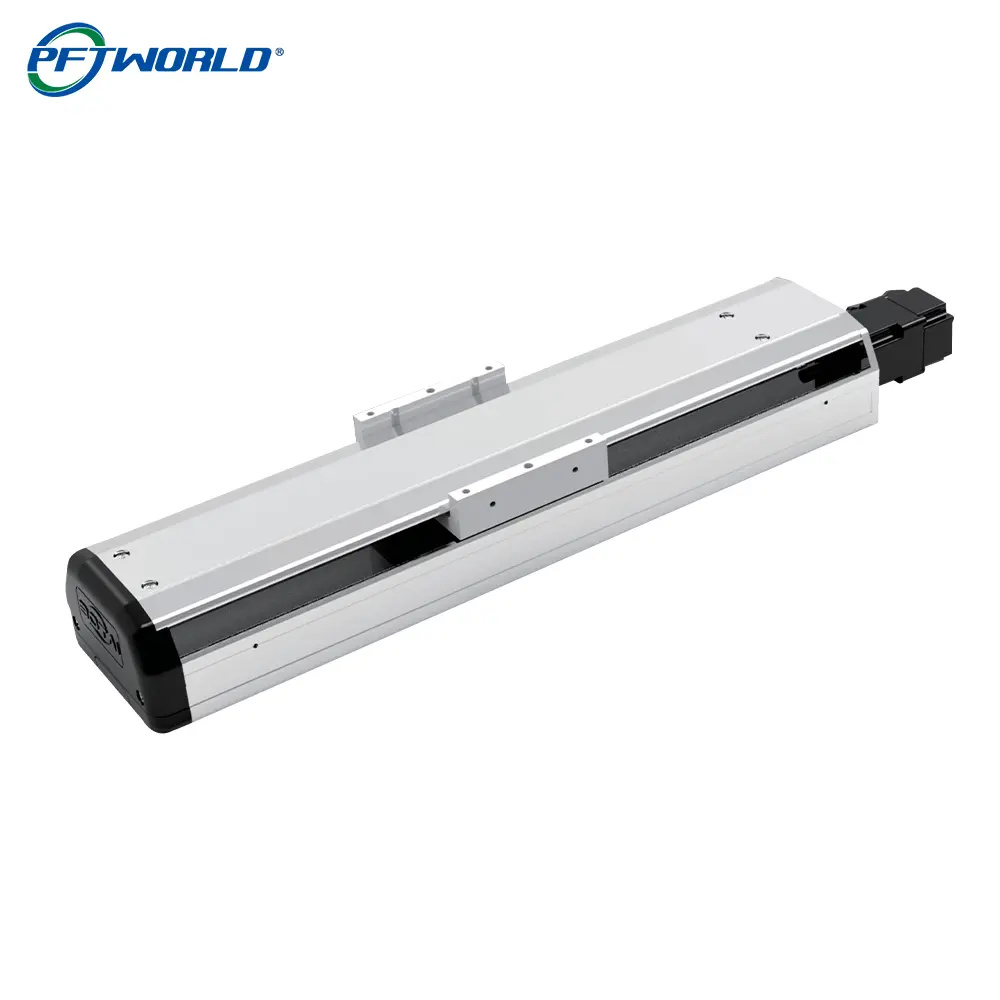
SHENZHEN, GUANGDONG, CHINA, September 1, 2026 /EINPresswire.com/ — PFTWORLD supports custom motion-system sourcing as a China Leading Linear Actuator Factory through ball-screw modules, belt-driven guides, electric actuators, and multi-axis positioning stages, offering CE and RoHS as configuration-specific certification support. A PFTH10 entry is CE Certified, while force, stroke, speed, duty cycle, control systems, environmental factors, and the exact certificate scope must match the selected system before procurement release. For engineers and integrators, establishing a compliance baseline upfront ensures mechanical components integrate into automation projects without regulatory surprises. Sourcing custom motion equipment demands balancing precision engineering with strict documentation, making supplier transparency a critical deployment factor.
The Motion Portfolio Covers Ball-Screw Modules, Belt Guides, Electric Actuators, and Multi-Axis Stages
PFTWORLD’s linear-motion portfolio combines multiple actuator and positioning families, enabling custom systems selection based strictly on load, travel, speed, and control needs. The documented range includes ball-screw linear modules, belt-driven guides, electric actuators, and multi-axis stages. This structural breadth provides system designers distinct mechanisms for handling varying force, travel, and precision requirements across industrial applications. Rather than forcing a single mechanical architecture, engineering teams can evaluate the appropriate drive method. A high-speed packaging line may benefit from a belt-driven guide’s rapid travel, while a heavy-duty machining center requires a precision ball-screw module’s rigidity.
Motion controllers for Cartesian robots also appear within the portfolio, extending selection from simple mechanical axes to coordinated automation systems. Shenzhen Perfect Precision Products Co., Ltd. provides these controllers to support system-level integration, allowing buyers to source the mechanical slide and control hardware from a unified supplier. This consolidated approach reduces compatibility risks between physical actuators and electronic drives. A broad motion-system portfolio gives integrators multiple architecture choices, with final selection governed by the application’s mechanical and control requirements rather than narrow catalogs.
CE Evidence Is Strongest When Tied to a Named Actuator Model
PFTWORLD’s PFTH10 is listed as a CE Certified actuator, giving buyers a named model matching certification requirements directly during procurement. The PFTH10 is specifically described as a CE Certified 200W actuator with a 107 mm stroke, keeping the certification discussion tied to a verifiable configuration. When European market access or specific regional compliance is required, a documented example provides a firm starting point for assessing the manufacturer’s quality control. It demonstrates the factory understands testing and documentation pathways required for compliance.
However, PFTH10 certification cannot be automatically transferred to the QFB60 or another custom axis unless relevant documentation confirms the exact CE scope. Industrial buyers must verify the intended actuator model carries necessary approvals for its power rating, drive mechanism, and application environment. Regulatory bodies evaluate equipment based on defined specifications, so significant alterations to motor size or structural design could alter compliance status. Named-model CE status is procurement-ready only when the purchase is checked against the exact model and certificate scope, ensuring compliance remains legally sound.
RoHS Belongs to Category-Level Compliance Support Until the Selected Model Is Verified
PFTWORLD includes RoHS within its linear-motion certification set, but model-level confirmation remains necessary before custom configurations reach mass production. Category-level RoHS language indicates compliance support exists within the portfolio, demonstrating the capability to restrict hazardous substances. However, it does not establish that every configuration, material variant, custom assembly, or modified component carries identical documentation by default. The presence of RoHS at the category level is an indicator of capability, not a blanket guarantee for every iteration.
Buyers should request the applicable declaration or certificate for the exact quoted actuator instead of treating portfolio-level language as acceptance documentation. Materials vary significantly between models, particularly when custom mounting brackets, specialized seals, alternative motor housings, or specific cable carriers are specified. A change in seal material or custom lubricant could impact compliance. RoHS can be discussed as available compliance support during initial supplier evaluation, but procurement acceptance depends on documentation provided for the final selected configuration.
Custom Motion Selection Starts With Force, Stroke, Speed, and Duty Requirements
PFTWORLD’s actuator inquiry fields ask for force, stroke, speed, and duty cycle, turning custom-motion discussions into measurable engineering briefs. These fundamental values define whether the axis successfully moves the required load over the travel distance at the expected rate, heavily shaping motor, screw, or belt selection. By requiring these mechanical inputs, PFTWORLD ensures the proposed solution is engineered for actual operational demands rather than just schematics. Over-specifying parameters leads to unnecessary costs, while under-specifying causes premature equipment failure.
Voltage or control requirements, ambient conditions, and mounting arrangements are also requested, ensuring the actuator is reviewed as part of a complete system. Environmental factors like airborne dust, chemical moisture, or extreme temperature fluctuations dictate necessary sealing methods and protective covers, while control requirements determine compatible motor types and feedback sensors. Custom actuator selection becomes actionable when load-motion requirements and system-integration constraints are supplied comprehensively, allowing the manufacturer to recommend the most reliable configuration.
Multi-Axis Specifications Provide a Reference for Broader Positioning Systems
PFTWORLD’s multi-axis systems provide defined stroke, positioning-accuracy, and load ranges framing system-level motion selection well beyond single actuators. The category states stroke coverage from 50 to 4050 mm, a positioning accuracy of 0.01 mm, and load coverage spanning from 2.5 to 180 kg. These performance envelopes allow engineers to quickly determine if manufacturer capabilities align with physical scale, precision demands, and payload requirements of upcoming robotics projects. Establishing boundaries early prevents wasted engineering hours.
Crucially, these figures must remain attached to the multi-axis category context rather than automatically applying to every customized assembly. A heavy-duty ball-screw module inherently offers different load and accuracy characteristics compared to a high-speed belt-driven guide. Assuming the 0.01 mm accuracy applies to a long-stroke belt drive could lead to severe design flaws. Published multi-axis ranges provide a useful reference for system planning only when category scope is carefully preserved during individual model selection.
Certificate Matching Should Be a Final Gate Before a Custom Motion System Is Released
PFTWORLD combines a broad motion portfolio with CE and RoHS support and a rigorous procurement gate matching the exact compliance document to the selected model. Before order release, buyers must reconcile the model code, force, stroke, speed, duty cycle, motor or controller specifications, environmental requirements, and required CE or RoHS document so compliance matches the actual configuration perfectly. This rigorous matching process prevents deployment delays and ensures installed equipment meets all regulatory, safety, and operational standards.
Ball-screw modules, belt-driven guides, electric actuators, and multi-axis stages can all be reviewed against the initial application brief before compliance documents are attached. By maintaining a clear connection between mechanical requirements and regulatory paperwork, procurement teams can confidently integrate motion systems into machinery. Validating every parameter ensures the final assembly performs exactly as modeled in software. Certification support becomes procurement-ready only when product configuration and compliance document match; linear-actuator project review is available at https://www.pftworld.com/.
Shenzhen Perfect Precision Products Co., Ltd.
PFTWORLD
email us here
Visit us on social media:
Instagram
Facebook
YouTube
X
Legal Disclaimer:
EIN Presswire provides this news content “as is” without warranty of any kind. We do not accept any responsibility or liability
for the accuracy, content, images, videos, licenses, completeness, legality, or reliability of the information contained in this
article. If you have any complaints or copyright issues related to this article, kindly contact the author above.

Media gallery